
Last weekend I built a 1U-scale WOPR-style display, a replica of the blinking ‘thinking computer’ from WarGames, and mounted it in a server rack. Twelve 8x8 LED matrices flickering with random patterns, powered by a $6 microcontroller, housed in a 1U enclosure I designed and 3D printed in an afternoon.
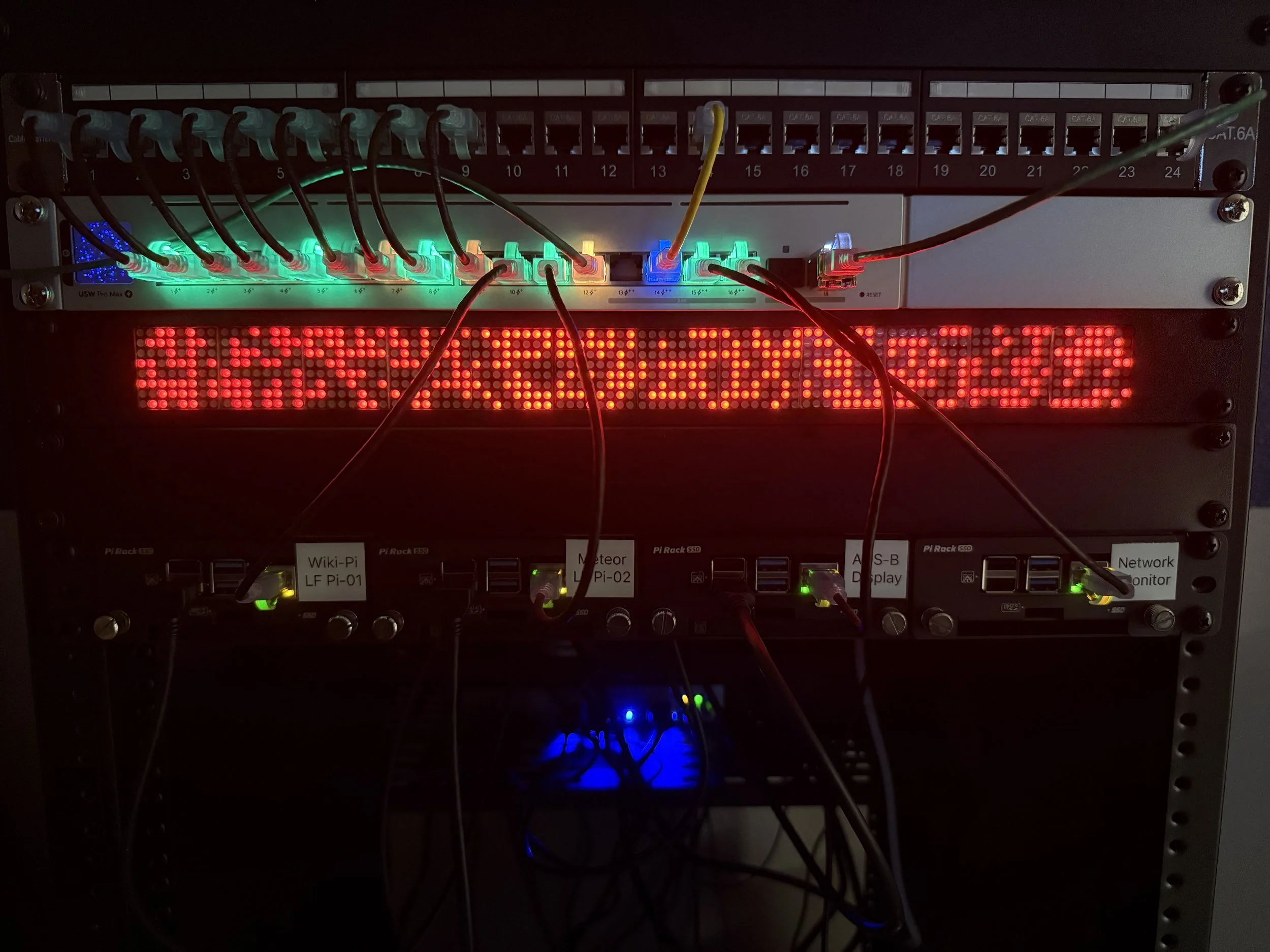
A small, physical system inside a much larger one, built to keep first principles close at hand.
It’s completely useless. And that’s exactly the point.
The Case for Strategic Tinkering
As someone who spends most of my time in architecture diagrams, roadmaps, and stakeholder alignment, it’s easy to lose touch with how things actually get built. The abstractions pile up. You start thinking in boxes and arrows instead of volts and bytes.
Building something physical, something that requires you to debug a “bad SCK pin” error or figure how to daisy chain three LED modules without soldering, reconnects you to first principles. You remember that every enterprise system, no matter how sophisticated, eventually comes down to someone making electrons do the right thing at the right time.
What a Toy Project Teaches You
This wasn’t a complex build. A Raspberry Pi Pico W, some LED modules, a breadboard, and a few hours of work. But even in that simplicity, I encountered decisions that mirror enterprise challenges:
Trade-offs are everywhere. My LED modules lacked output headers for daisy-chaining. I could solder them, buy different modules, or redesign the wiring. I chose a software workaround, three separate chip-select lines instead of one chain. It’s not the “textbook” solution, but it shipped.
Security defaults matter. The Pico sits on an isolated IoT VLAN, not my main network. A toy project, but I still thought about circular error probable and blast radius. That instinct should be automatic, and tinkering keeps it sharp.
Documentation is a gift to your future self. I wrote up the wiring, code, and configuration as if I’d never seen the project before. Because in six months, when I build the next one, I won’t remember which GPIO pin does what.
The Unexpected Value of Useless Things
The WOPR display doesn’t do anything productive. It just blinks. But it’s already sparked ideas: What if it displayed alerts from my home automation system? What if I built several and distributed them around the house? What if the pattern changed based on system health?
That’s what tinkering does. It creates surface area for serendipity. You build something small and useless, and it becomes a platform for something bigger.
Build Something
If you’re deep in strategy and architecture, find a weekend project that gets your hands dirty. It doesn’t have to be useful. It doesn’t have to be impressive. It just has to be real: real components, real bugs, real constraints. You’ll come back to your day job with sharper instincts and better questions.
And maybe some cool blinking lights.